
The first 30 seconds of an active threat incident are often the most critical. This is true in any setting, but it is especially important in church environments, where people gather in large numbers in a setting built on trust, openness, and community. While these types of events are rare, thoughtful preparation is one way we can care for and protect one another. Incorporating mobile app alerts can expedite your response to spread awareness during first :30 seconds.
Active threat preparedness involves careful planning, evaluation, and practice. Many churches have already taken steps to improve safety through trained volunteers, security teams, and emergency procedures. These efforts are important. At the same time, real-world incidents continue to show that every second matters. Even a brief moment of advance warning can create an opportunity for individuals to take protective action.
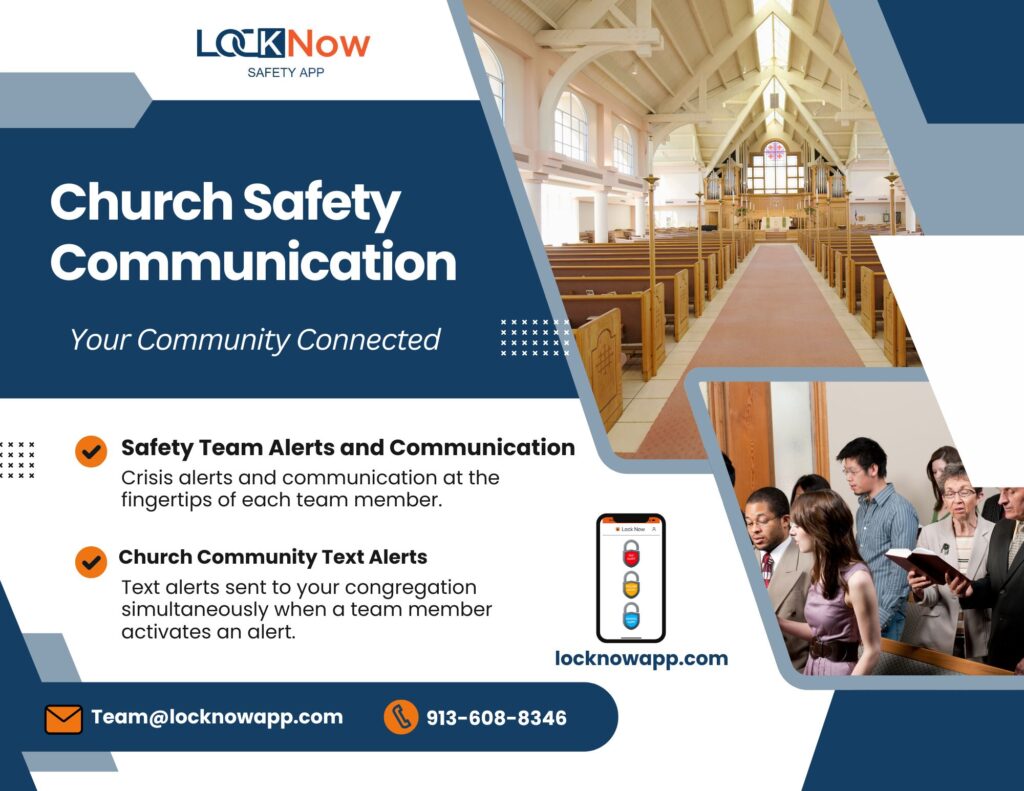
One way to support this early awareness is through mobile panic buttons or alert applications from the Locknow Safety App. These tools allow a threat to be communicated quickly to others in the church, often within seconds. That immediate awareness can help individuals make faster decisions—whether that means securing in place, moving to a safer location, or assisting others nearby. It also gives designated safety or security personnel valuable time to respond.
Mobile alert systems are designed to notify others the moment a concern is identified. While the amount of warning time may be limited, even a few seconds can be meaningful. For example, in 2017, the attack in Sutherland Springs, Texas began with gunfire outside the church building before the attacker entered. Although the timeline unfolded very quickly, earlier awareness inside the church may have provided additional moments for people to respond and take protective action.
There are several practical steps churches can consider when thinking about safety and preparedness. One is the use of trained individuals positioned outside the building, particularly during services or large gatherings. In facilities where trained personnel are not available, these individuals can still help observe activity in parking areas and entrances, providing an added layer of awareness. If something unusual or concerning is identified, that information can be communicated quickly via mobile app alert to those inside.
In addition, mobile alert tools can help rapidly notify large groups and initiate a coordinated response. Prior to church services, you may have members on campus and en route to your facility, an alert would bring awareness to everyone regardless of their location. When used effectively, they can reduce confusion and provide clarity during a stressful situation. The goal is not to create alarm, but to ensure that important information reaches people as quickly as possible.
Preparation should also include a focus on taking action. It is important for individuals and teams to think through possible responses ahead of time and become familiar with them. In high-stress situations, people do not always react immediately. A common response—sometimes referred to as the “ostrich effect”—is to hear or notice something unusual but assume it is harmless. This natural tendency can delay action at a time when seconds matter.
This type of delayed response has been observed in multiple incidents, including the 2018 synagogue attack in Pittsburgh, Pennsylvania. In that case, some individuals initially struggled to interpret the sounds they were hearing, which is a very human reaction. Understanding this tendency can help us better prepare by encouraging awareness and readiness to act when something does not seem right.
Because stress can significantly affect how we think and respond, your mobile technology needs to be simple and easy to use. The primary purpose of any alert system is clear: to quickly communicate the presence of a potential threat. Systems that are overly complex may be more difficult to use in a moment of urgency. The most effective tools are those that are intuitive, reliable, and easy to activate.
It is also important to recognize that no single plan will cover every situation and we will discuss below that communication is no different. The widely known “Run, Hide, Fight” approach provides a helpful general framework for responding to an active threat. However, each situation is unique, and individuals may need to make quick decisions based on their surroundings. Having flexible plans—and taking time to think through different scenarios—can help people respond more effectively.
Communication plays a central role in any safety plan. Delays in sharing information can limit the ability to respond while it enables confusion and increases vulnerability. For this reason, churches should consider using multiple methods of communication during an emergency. Mobile alerts can be very effective, but they should be used alongside other tools such as radios, public address systems, or direct communication between team members. A layered approach helps ensure that messages are received even if one method fails.
Some alert systems also allow communication to extend beyond staff or safety teams to the broader church community. For example, text-based notifications can be used to reach large groups quickly without requiring everyone to download a specific application. This can be especially helpful for visitors or members who may not be part of a formal safety program. The principle is simple: faster awareness supports a faster, more effective response. Thse text alerts can be sent simultaneously with the original alert notification bringing critical awareness to everyone quickly.
It is also worth noting that technology, while helpful, is only one part of a comprehensive safety plan. Like any tool, it can have limitations. This is why it is important to combine technology with training, planning, and human awareness. Having multiple tools available—such as radios, designated observers, and clear procedures—creates a stronger overall approach to safety.
Ultimately, your preparedness is not complete without planned communication. It is a critical part of the process that cannot be taken for granted, it should be deliberately planned. While this part of the plan seems simple, it is highly important.
By focusing on early awareness, clear communication, and taking immediate action, churches can strengthen their ability to respond in a crisis. While we hope these plans are never needed, incorporating mobile alert applications can strengthen your procedures and improve your response time to an active threat.
INTERESTED IN A FREE TRIAL? ENROLL HERE.