
Panic Button Technology for Lubbock Workplaces
Locknow Safety App workplace emergency preparedness tools, including its panic button technology, enable businesses in Lubbock to respond quickly and effectively to active threats. Once an employee activates an alert, vital information is delivered instantly to responders, improving situational awareness and enabling immediate action. This rapid communication minimizes confusion, enhances employee safety, and provides organizations with the tools needed to maintain a secure and well-prepared work environment.Our team delivers professional panic button technology near me for offices, corporate sites, and private schools, including installation, active threat response training, and emergency alert protocols to ensure your workplace is secure and prepared for any emergency.
For details on how our safety technology supports workplace protection, click here.
Try the Locknow App with your staff at no cost—our FREE TRIAL requires no risk and no obligation. To register, simply click here.
Protect Your Employees in Lubbock
Introducing the Locknow Safety App within your company empowers employees with instant panic button access, enabling rapid communication and immediate crisis response. With Locknow, your organization in Lubbock receives the following safety advantages:
- Real-time alerts pushed to all employees during active threat events
- Panic button technology available throughout your entire facility
- Active Shooter alerts that communicate the exact threat location
- Alert systems tailored to your workplace’s unique needs
- Incident messaging that delivers crucial communication instantly
- Expert guidance to help refine and strengthen safety protocols
- Complimentary intruder and active threat response training
- Direct support for staff experiencing technical challenges
- Free evaluation of your physical security setup
- Additional resources designed to enhance overall workplace safety
For detailed information on pricing, click here to see Locknow Safety App Pricing.
Employee Safety Communication in Texas
The Locknow Safety App ensures your workplace receives fast emergency notifications while also enabling ongoing communication during a crisis. The communication examples below show how Texas team members stay connected during an intruder situation. Whether relaying attacker information, giving employee instructions, or sharing updates, this communication supports continuous awareness and offers employees valuable, lifesaving reassurance.
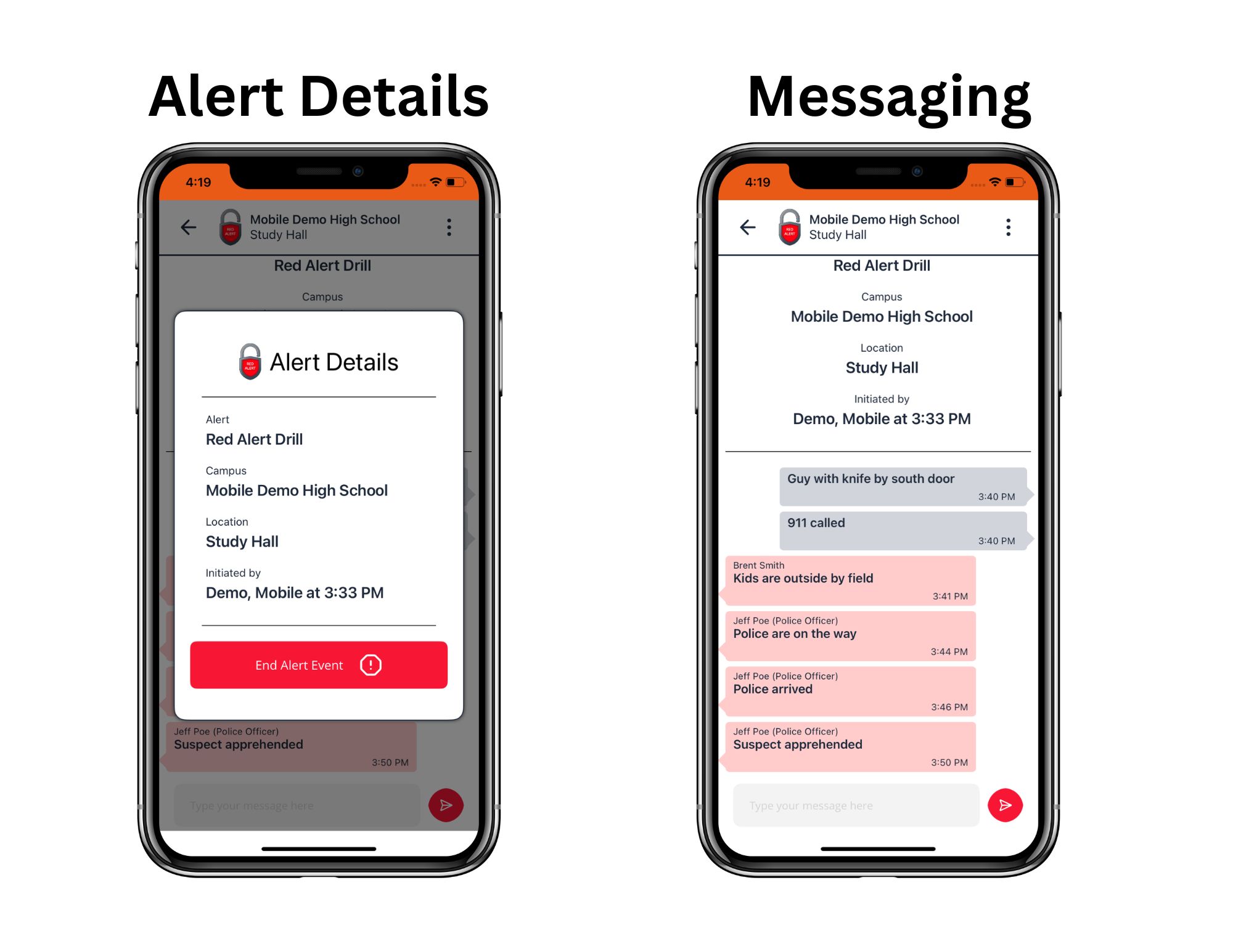
For details on how our safety technology supports workplace protection, click here.
Try the Locknow App with your staff at no cost—our FREE TRIAL requires no risk and no obligation. To register, simply click here.
Complete Workplace Emergency Preparedness Lubbock
Locknow Safety is more than a workplace panic button system; we are your complete safety solution. We provide guidance and corporate safety protocols so employees can focus on their responsibilities. Active shooter response graphics help staff understand how to respond to intruders. We use the Run, Hide, Fight approach and provide resources for clear communication of safety plans. Free active threat response training is offered, matching discounted on site training content. Lubbock employees leave empowered, confident, and ready to act without fear. To learn more about our active Shooter Response training, CLICK HERE.
Safety and Security Resources in Texas for your Company
If you need trusted panic button technology near me, Locknow Safety offers comprehensive workplace panic button solutions for businesses across Texas. Our system ensures immediate alerts and fast response during emergencies, helping safeguard your employees. We also strengthen your crisis preparedness by providing safety planning, response protocols, and physical security assessments. Since many private and small schools do not have full-time safety staff, we step in with the expertise needed to support your safety goals. We collaborate with your team to create customized solutions tailored to your environment.
For additional details about our safety solutions, CLICK HERE.
Corporate Safety is Our First Priority
Active Shooter Response | Anti-Bullying Guide | Behavioral Health Guide | Crisis Management Plan | Emergency Drills Guide | Legal Compliance Guide | Parent Community Involvement | Safety Compliance Checklist | company Safety Equipment
About Lubbock
Lubbock ( lub-k ) is the 11th-most populous city in the u.s. State of texas and the county seat of lubbock county. With a population of 256,042 in 2015, the city is also the 83rd-most populous in the united states. The city is in the northwestern part of the state, a region known historically and geographically as the llano estacado, and ecologically is part of the southern end of the high plains, lying at the economic center of the lubbock metropolitan area, which has a projected 2020 population of 327,424. Lubbocks traditional business atmosphere: low rent for commercial space, central location, and cooperative city government. Lubbock is home to texas tech university, the sixth-largest college by enrollment in the state. Lubbock high company has been recognized for three consecutive years by newsweek as one of the top high companys in the united states, based in part on its international baccalaureate program. Lubbock is considered to be the center of the south plains, and is situated north of the permian basin and south of the texas panhandle. According to the united states census bureau, as of 2010, the city has a total area of 123.55 sq mi, of which, 122.41 sq mi of it, is covered by water. As of the census of 2010, 229,573 people, 88,506 households, and 53,042 families resided in the city. The population density was 1,875.6 people per square mile. The 95,926 housing units averaged 783.7 per square mile. The racial makeup of the city was 75.8% white, 8.6% african american, 0.7% native american, 2.4% asian, 0.1% pacific islander, 9.9% from other races, and 2.5% from two or more races. Hispanics or latinos of any race were 32.1% of the population. Non-hispanic whites were 55.7% of the population in 2010, down from 77.2% in 1970.